
The Invisible Cost of Improvisation on Productivity
About ten years ago, a good friend (Steve McMahon) told me that the primary reason he used a MacBook — instead of a laptop running Linux — was simple: his computer was his work tool, and he needed to be productive.
It’s important to clarify that this comment was not, in any way, a criticism of Linux, but rather an honest assessment of his own inability to resist the urge to endlessly search for the perfect configuration between operating system, graphical environment, and all the drivers required for the hardware to work properly.
On the other hand, because Apple controls all possible combinations of operating system and hardware, things are simply supposed to work.
I took Steve’s advice, and since then I’ve tried to avoid “entertainment” on my work equipment, keeping my configurations stable. Of course, that doesn’t prevent small tweaks and improvements — such as adopting zsh instead of Bash, switching from Alfred to Raycast, or using Magnet and Obsidian — but overall I stick with MacBooks and macOS precisely to reduce unnecessary friction.
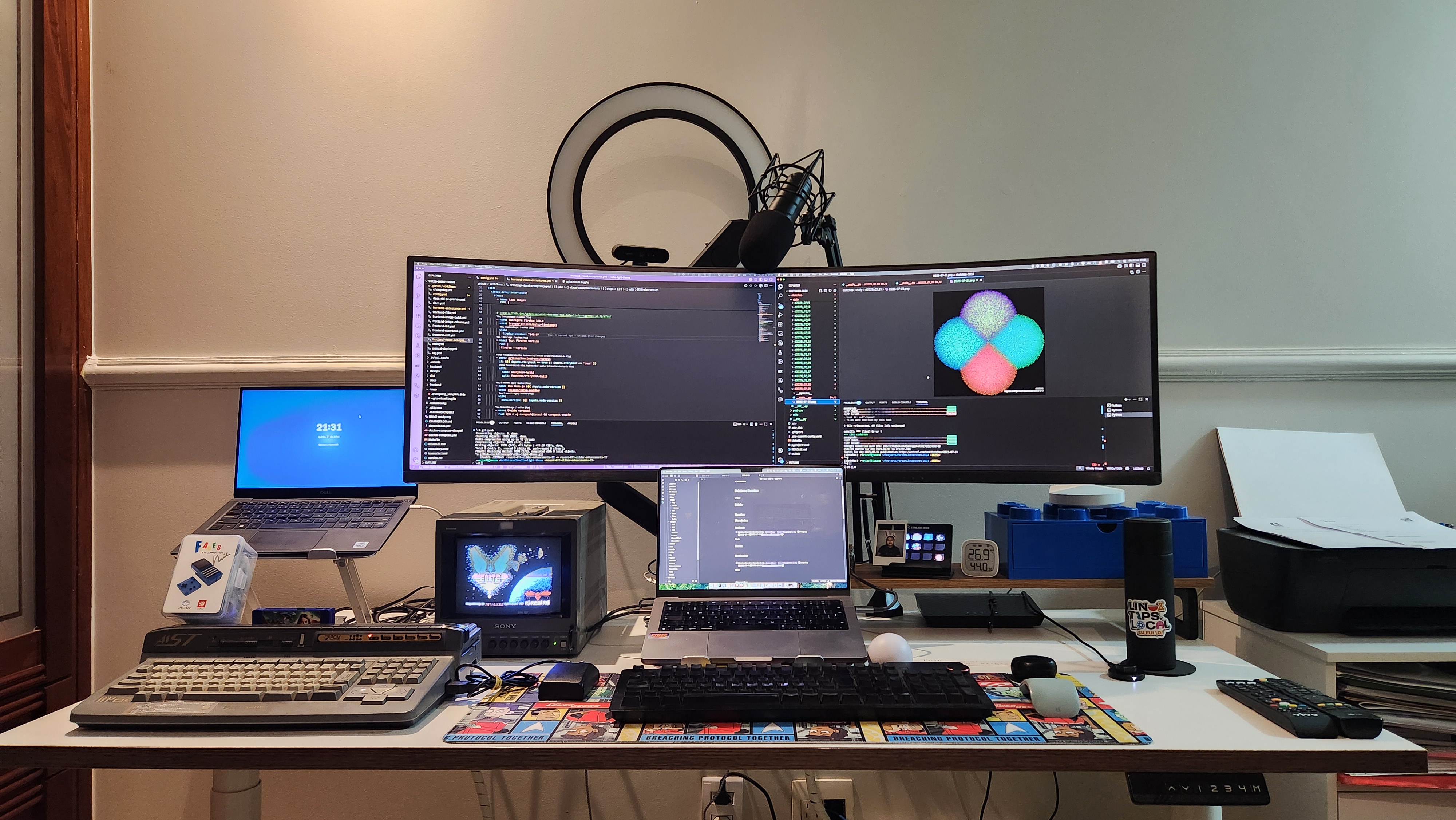
As time went by, ergonomics also became a concern. Better chairs, more appropriate desks, and, of course, larger monitors. Over the past six years, I’ve invested heavily in this area, because tendinitis, headaches, or even difficulty reading small text end up being far more costly, in productivity terms, than a poorly configured IDE.
In 2025, I delivered eight remote Plone training sessions for clients in Brazil, and I believe I reached a solid setup. On the software side, I use Google Meet for the classes, a Plone site for the training documentation, and Obsidian for my personal notes. To stay aligned with what the Plone community commonly uses, I rely on GitHub, VS Code, and Docker.
During the sessions, I always keep my camera on and share the screen of one of my monitors, with the browser, terminal, and IDE open. I chose this approach because it’s the closest equivalent to an in-person class, where I would typically share the contents of a second monitor via a projector.
This setup works perfectly when I teach from my apartment in Brasília — aside from the occasional noisy neighbor or internet provider issue. However, in 2025, due to family commitments, I had to deliver two sessions from my flat in São Paulo. And that’s where improvisation begins.
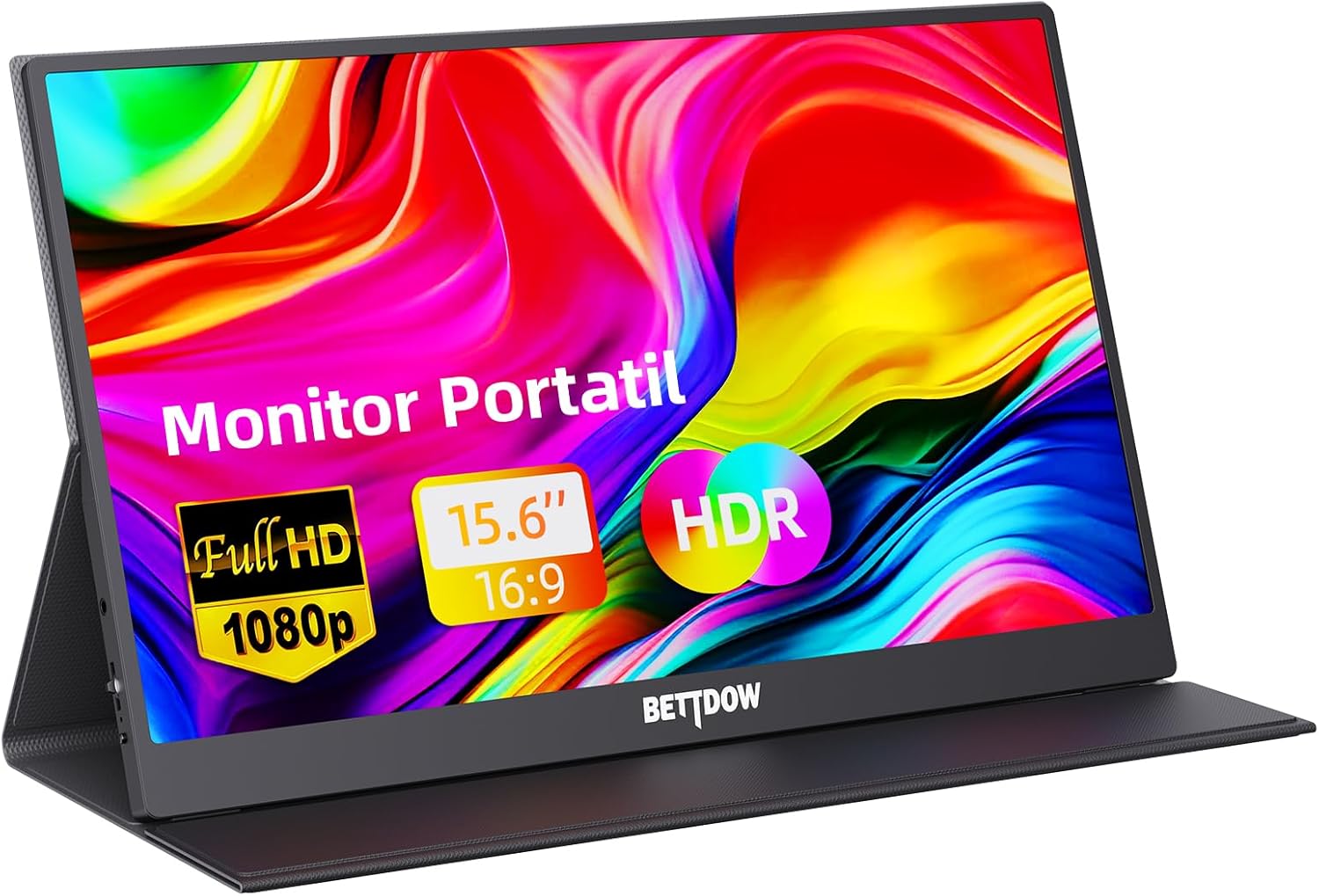
Anticipating this possibility, I had already purchased a 15-inch portable external monitor. The ergonomics weren’t ideal, but the logistics worked: the Google Meet window and my notes stayed on the laptop screen, while the content being shared was displayed on the external monitor. For those sessions, everything worked surprisingly well.
Then came 2026. I committed to delivering 36 hours of training for a client during the first weeks of January, a period when I would again be in São Paulo. Given the “success” of the previous sessions, I procrastinated on preparation. After all, the monitor was right there, and I had plenty of USB-C cables available. I decided to set everything up only the night before, about ten hours before the classes were scheduled to begin.
And, of course, things went wrong.
I tested every USB-C cable I had. All of them worked for charging and data, but none were high-speed enough for the monitor. I immediately went to Amazon, bought the correct cable, and received a promise of delivery the next day.
In the best-case scenario, only part of the first day would be improvised.
But not everything went as planned. The delivery was delayed, and most of the training — about 20 hours — ended up being conducted in an improvised way.
The lack of a single cable created a disproportionate problem. The entire process I had refined over years stopped working. In addition to focusing on the content being taught, I now had to constantly monitor screen changes, re-sharing in Google Meet to avoid talking about something the students couldn’t see.
During those 20 hours, there were dozens of moments when I slipped into “autopilot” — the good kind, built through repetition and practice — and forgot to update the screen sharing, only to be promptly reminded by the students.
That’s the core point: the improvisation didn’t break anything in a spectacular way. It merely added a constant, invisible, and exhausting cognitive load. Each small extra decision, each manual check, each interruption seemed insignificant on its own — but together, they drained focus, energy, and flow.
Small improvisations rarely fail all at once.
They fail slowly.